


Element E100 Fire Extinguisher
Element E100 Fire Extinguisher
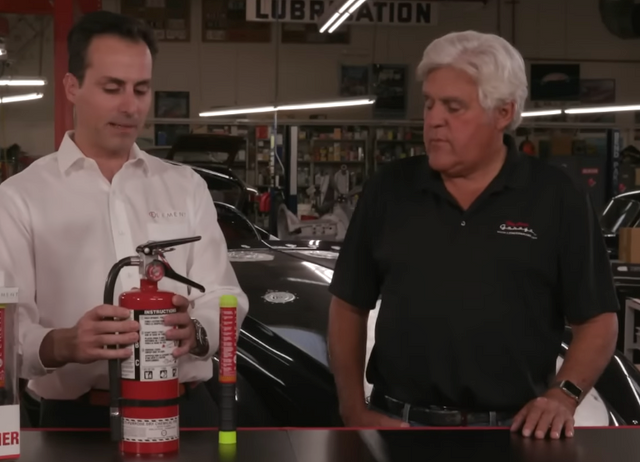
The Element E100 is a 13-inch fire-suppression stick that puts out 100 seconds of clean discharge. It fights all four major fire classes: A (wood and fabric), B (fuel and flammable liquid), C (electrical), and K (cooking oil and grease). At about 0.8 lb and 13 inches tall, it fits a door pocket, a seat-back panel, or a galley drawer, so it rides where a 5-lb bottle never would.
It works on chemistry, not pressure. There is no gauge to babysit and no compressed gas to leak. The discharge is a clean gas that leaves no powder to scrub off electronics, wiring, or upholstery. Pull the top cap, pull the bottom cap, strike the igniter, and aim at the base of the flames. The gas is heavier than air and settles into engine bays and enclosed compartments, which is where it earns its place in a rig.
This is a small-fire tool, built for catching an engine, fuel, or stove fire early, not a replacement for a full-size extinguisher on a big open burn. There is no effective expiration and nothing to service: it holds a 10-plus-year shelf life and survives storage from -58°F to +176°F, wet or dry. It is single-use, so once you strike it, replace it. Ships with a mounting clip and a high-visibility striker cap.
Couldn't load pickup availability


Overview
The Element E100 is a compact, single-use fire-suppression stick that delivers 100 seconds of clean, no-residue discharge against Class A, B, C, and K fires. It runs on a chemical reaction instead of pressurized gas, so there is no gauge, no service interval, and no effective expiration.
Key features
- 100 seconds of discharge, roughly 10x the burn time of a 5-lb extinguisher bottle
- Fights Class A, B, C, and K fires, including cooking oil and grease
- Clean gas discharge that leaves no powder residue on electronics or upholstery
- No moving parts, no compressed gas, no gauge, and no required maintenance
- 13 inches tall and about 0.8 lb, with a mounting clip and high-visibility striker cap
Use cases
Built for early knockdown on the fires a rig actually faces: an engine-bay or wiring fire caught before it spreads, a fuel or flammable-liquid fire that powder would just scatter, or a camp-stove grease flare-up you do not want to coat the whole galley to stop. The heavier-than-air gas settles into enclosed compartments, so it works well inside an engine bay. Keep it for small, contained fires, not open ember piles.
- Discharge time: 100 seconds
- Fire classes: A, B, C, K (wood/fabric, fuel/liquid, electrical, cooking oil/grease)
- Height: 13 in (33 cm)
- Unit weight: about 0.8 lb (~360 g)
- Discharge type: Zero-pressure clean gas, no residue
- Construction: No moving parts, no compressed gas
- Storage temperature: -58°F to +176°F (-50°C to +80°C)
- Shelf life: No effective expiration; 10+ years
- Maintenance: None required
- Service life: Single-use, no refill
- Included: Mounting clip, high-visibility striker cap
What kinds of fires can the E100 put out?
All four major classes: A (wood and fabric), B (fuel and flammable liquid), C (electrical), and K (cooking oil and grease). That covers most of what starts in a vehicle, a galley, or around camp.
Does it expire or need servicing?
No. There is no gauge, no compressed gas, and no moving parts, so there is nothing to recharge or service. The solid chemical has no effective expiration and holds a 10-plus-year shelf life.
Can I reuse it after it goes off?
No. The E100 is single-use. Once you strike the igniter and discharge it, you replace it rather than refill it.
Will it survive being stored in a hot or wet vehicle?
Yes. It is rated from -58°F to +176°F and is weatherproof, so a hot cab in summer or a damp storage box will not hurt it. Keep the cap on the tip in wet storage.
Does it leave a mess like a powder extinguisher?
No. The discharge is a clean gas, not dry chemical, so there is no powder to scrub off wiring, electronics, or upholstery. At most it leaves a trace of soot.
Is it a full replacement for a regular fire extinguisher?
No. The E100 is built for small, early-stage fires in vehicles and enclosed spaces. It is not meant for large open burns or open ember piles, where residual heat can re-flare. Treat it as a fast first response, not your only line of defense.