


Jackery Solar Generator 1000 v2
Jackery Solar Generator 1000 v2
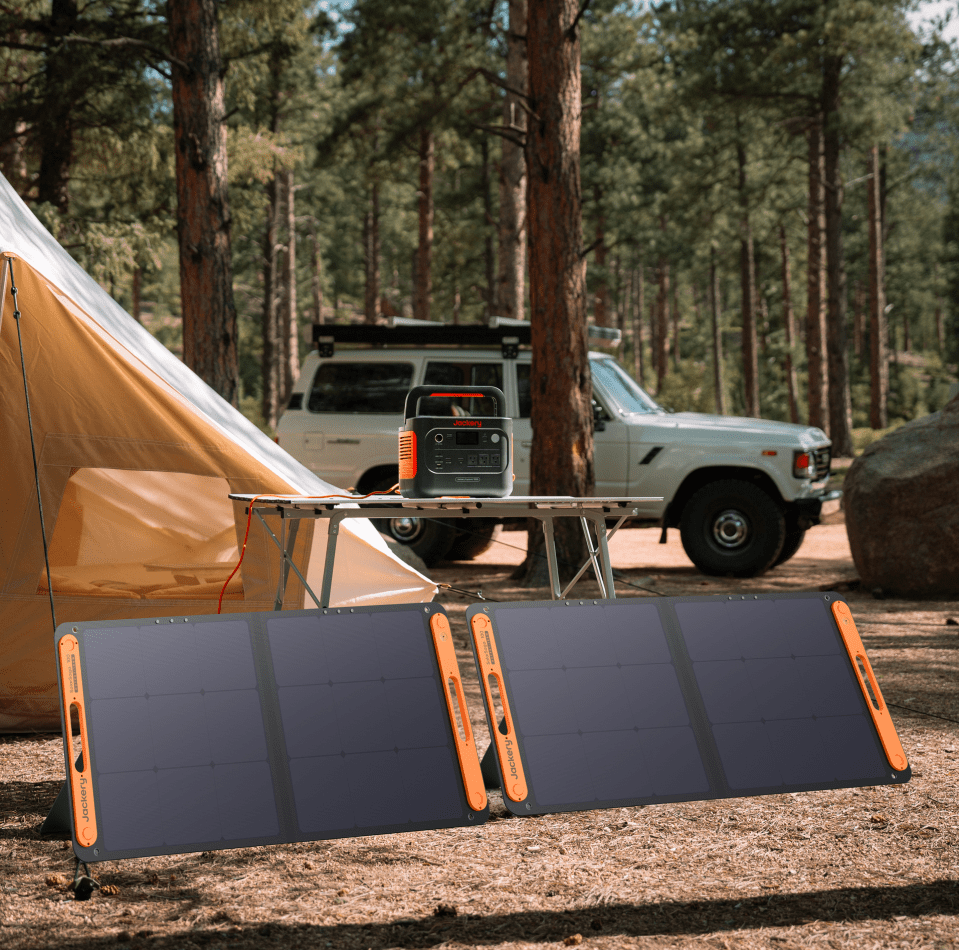
The Jackery Solar Generator 1000 v2 is a one-box solar kit: a Jackery Explorer 1000 v2 power station paired with a Jackery SolarSaga 200W folding panel. The station holds 1070Wh in LiFePO4 cells and pushes 1500W of continuous AC (3000W surge) across three 120V outlets, two USB-C ports (100W and 30W), a USB-A port, and a 12V/10A car port. The panel is rated 200W, IP68, and bifacial, so it pulls light off both faces.
Charging is the standout. Emergency mode takes the station from 0 to 100% in about an hour on AC; a normal AC charge runs roughly 1.7 hours. The bundled 200W panel reaches about 80% in six hours of solid sun, so you can run a load off the station in the shade while the panel sits out catching light. LiFePO4 cells are rated for 4000 cycles, which is 10-plus years of regular use, and the kit carries a 5-year warranty.
This is plug-and-play off-grid power, not a parts list. In the box: the Explorer 1000 v2 station, the SolarSaga 200W panel, an AC charging cable, and a solar charging cable. The station weighs 23.8 lb with a folding handle; the panel folds to a 24-inch case at about 13.7 lb. One charge runs a 200W fridge around 12 hours, keeps phones and a CPAP going overnight, and tops back up from the sun the next day.
No se pudo cargar la disponibilidad de retiro



Overview
A Jackery Explorer 1000 v2 power station bundled with a SolarSaga 200W panel. 1070Wh of LiFePO4 capacity, 1500W AC output, and solar that tops the bank back up off-grid. One kit, no cable hunting.
Key features
- 1070Wh LiFePO4 battery rated for 4000 charge cycles (10+ years) and backed by a 5-year warranty.
- 1500W rated AC output, 3000W surge across three 120V pure sine wave outlets.
- 0 to 100% in about 1 hour on emergency AC charge; ~1.7 hr on a standard AC charge.
- SolarSaga 200W panel included — IP68, bifacial, folds to a 24-inch case at ~13.7 lb; ~80% station charge in 6 hours of good sun.
- Full port set: 2 USB-C (100W + 30W), 1 USB-A (18W), 1 12V/10A car port, plus the three AC outlets.
Use cases
Built for off-grid camp power, RV and van trips that need a daily solar top-off, and home backup that keeps a fridge, phones, and a CPAP running through an outage. The panel-plus-station pairing means you recharge from the sun instead of rationing a fixed bank.
- Battery capacity: 1070Wh
- Cell chemistry: LiFePO4, 4000-cycle rated
- AC output: 1500W rated, 3000W surge, three 120V/60Hz outlets
- USB-C: 2 ports (100W max + 30W max)
- USB-A: 1 port (18W max)
- Car port: 12V/10A DC
- AC recharge: ~1 hr emergency / ~1.7 hr standard
- Solar recharge: ~80% in 6 hr with the bundled 200W panel
- Car recharge: ~14 hr on 12V
- Station dimensions: 12.87 x 8.82 x 9.72 in
- Station weight: 23.8 lb
- SolarSaga 200W panel: 200W, IP68, bifacial; folds to 24.2 x 21.7 x 1.6 in at ~13.7 lb
- Charge temperature: 32 to 113 F
- Discharge temperature: 14 to 113 F
- Warranty: 5 years
- In the box: Explorer 1000 v2 station, SolarSaga 200W panel, AC charging cable, solar charging cable
What exactly comes in the kit?
The Solar Generator 1000 v2 ships the Explorer 1000 v2 power station plus a SolarSaga 200W folding panel, an AC charging cable, and a solar charging cable in one box. The station-only variants are the power station by itself, no panel.
Can it run a refrigerator during an outage?
Yes. A mid-size fridge pulling about 200W runs roughly 12 hours on a full 1070Wh charge. Fridges cycle on and off, so keeping the door shut stretches that further.
How fast does it recharge?
Emergency AC mode goes 0 to 100% in about an hour; a standard AC charge is around 1.7 hours. The bundled 200W panel reaches about 80% in six hours of good sun, and a 12V car charge takes roughly 14 hours.
Will it charge in cold weather?
It discharges down to 14 F, but the battery will not accept a charge below 32 F — that is a LiFePO4 protection limit, not a fault. In winter, warm the station in the cab or tent before plugging it in to charge.
How should I store it between trips?
For long storage, leave it around half charge and top it off every few months. LiFePO4 cells hold up best when they sit mid-charge rather than full or empty.